
IUI vs IVF: Which Fertility Treatment May Be Suitable for You?
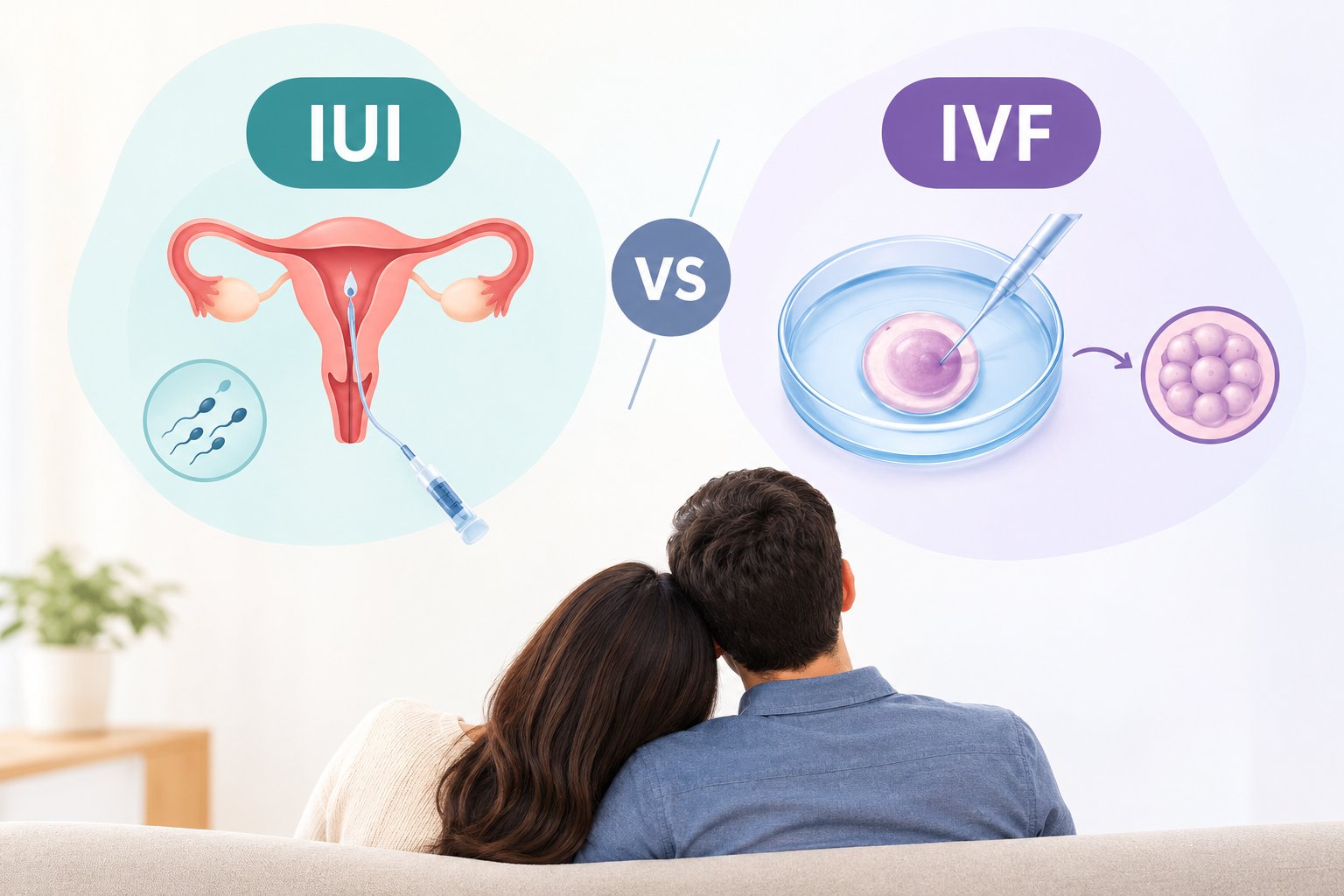
Trying to conceive can feel confusing and lonely, especially when everyone around you seems to have advice. Once couples begin a fertility evaluation, one of the first questions is, Should we try IUI or IVF? The answer is rarely the same for two couples. It depends on your age, your diagnosis, and how long you have been trying.
What Are IUI and IVF?
IUI (Intrauterine Insemination) places washed, concentrated sperm directly into the uterus around the time of ovulation. It supports the natural process of fertilisation inside the body.
IVF (In Vitro Fertilisation) involves collecting eggs, fertilising them with sperm in a laboratory, and transferring the resulting embryo into the uterus.
Factor | IUI | IVF |
Procedure | Prepared sperm placed in the uterus | Eggs collected, fertilised in a lab, embryo transferred |
Invasiveness | Minimal, similar to a Pap smear | More involved, includes a minor egg collection procedure |
Medication | Mild or no ovulation medicines | Hormone injections to develop multiple eggs |
Often considered for | Mild male factor, unexplained infertility, ovulation issues | Blocked tubes, severe male factor, endometriosis, advanced age, previous IUI not working |
Monitoring | Ultrasound around ovulation | Frequent scans and blood tests |
Cycle length | About 2 weeks | About 4–6 weeks |
Cost | Generally lower | Generally higher |
Your gynecologist will decide which type applies to you after examination and tests.
When Might IUI Be Considered First?
Doctors often begin with a simpler option when the underlying cause allows it. IUI may be suggested if:
- The fallopian tubes are open and healthy
- Sperm count or movement is mildly reduced
- Ovulation is irregular but can be supported with medicines
- Fertility tests show no clear cause (unexplained infertility)
- Intercourse is difficult for medical or personal reasons
For many couples, IUI may be considered before moving to other fertility treatments, depending on their individual needs. A fertility evaluation can help determine whether IUI or IVF may be an appropriate option for you.
When Might IVF Be Recommended?
Some situations call for a more advanced approach. IVF may be advised in cases such as:
- Blocked or damaged fallopian tubes, where sperm and egg cannot meet naturally
- Moderate to severe male factor infertility
- Endometriosis, particularly when it affects the ovaries or tubes
- Reduced ovarian reserve or advanced maternal age
- Several unsuccessful IUI cycles
In these situations, IVF bypasses the obstacle and gives the doctor more control over the steps of fertilisation.
What Factors Help Decide Between IUI and IVF?
Your specialist will usually look at several things together:
- Age: Egg quality and quantity change with age, so timing matters.
- Duration of trying: Couples who have tried for a long time may need to move forward sooner.
- Test results: These include ovarian reserve, semen analysis, tubal assessment, and ultrasound findings.
- Previous treatment: Earlier cycles help guide what to try next.
- Your preferences: Emotional readiness, finances, and time all count.
What Can You Expect During Treatment?
With IUI: You may take mild medicines, have ultrasound scans to track ovulation, and undergo a short, usually painless procedure. You can typically resume normal activities soon afterwards.
With IVF: The process begins with hormone injections, followed by regular monitoring, egg collection under sedation, fertilisation in the laboratory, and embryo transfer. It takes more time and emotional energy, so support from your partner and family makes a real difference.
Side effects such as bloating, mood changes, or mild discomfort can occur with either treatment. Your doctor will explain what to watch for.
Can Lifestyle Support Fertility Treatment?
Healthy habits will not replace medical treatment, but they can support your overall reproductive health. Maintaining a balanced diet, staying active, managing stress, avoiding smoking and alcohol, and keeping a healthy weight are all worth discussing with your doctor. Both partners’ health matters, not just the woman’s.
When Should You See a Fertility Specialist?
Consider an evaluation if:
- You are under 35 and have not conceived after 12 months of trying
- You are 35 or older and have not conceived after 6 months
- You have irregular periods, known endometriosis, or PCOS
- There is a known male factor concern
- You have had pregnancy losses
Early evaluation does not commit you to treatment. It simply gives you clarity. Many couples find that understanding their situation brings relief in itself.
Conclusion
IUI and IVF are both established fertility treatment options, but the right approach depends on the underlying cause of infertility, medical history, and individual circumstances. A proper fertility evaluation can help couples understand the available options and make informed decisions about their next steps.
Frequently Asked Questions
It depends on your diagnosis. Couples with open tubes and mild concerns may begin with IUI, while those with blocked tubes or more complex issues may be advised IVF directly.
Many specialists suggest a limited number of IUI cycles, often around three, before reviewing the plan. Your doctor will personalise this based on your age and results
Hormone injections and scans can cause some discomfort, but egg collection is done under sedation. Most women describe the process as tiring rather than painful.
No. Results vary from person to person, and no fertility treatment can promise a pregnancy. Your doctor can explain what to realistically expect in your case
Yes. Many couples begin with IUI and move to IVF if needed. Treatment plans can be adjusted at any stage.
Find the Right Next Step
If you’re experiencing difficulty conceiving, understanding the possible causes and suitable treatment options starts with a proper fertility evaluation.
Name:
Saukhyam Hospital
Address:
Entry from main, Mamta Maternity and Nursing Home 1st floor, Sai Sheetal Apartment, Swami Vivekanand Rd, above Aastha Life Care Hospital, Borivali East, Mumbai, Maharashtra 400066
Phone:
+91 86574 33631
Website:
www.saukhyamhospital.com